

Top 12 books for studying astrocartography and relocation astrology
Most people find astrocartography the same way, by noticing that life seems to work in some places and stall in others. You move, travel, or even just consider relocating, and suddenly, questions come up in the direction of: why did that city feel so easy? Why was that other place so heavy? And similar.
The thing is, once you start looking into astrocartography and locational astrology in general, the information can feel scattered. Some sources are overly technical, others stay vague, and it’s not always clear which books are actually worth your time. If you’re trying to seriously study relocation astrology, whether to read your own map or eventually work with others, you need material that’s both grounded and usable.
This list of the top 12 books for studying astrocartography and relocation astrology focuses on titles that astrologers actually rely on, books that explain how planetary lines behave in real locations, how relocation charts shift your perspective, and how to apply all of it without getting lost in abstraction.
Let’s begin with the more beginner-friendly ones, all the way to the more advanced ones.
*Some of the links in this post are affiliate links, which means I may earn a small commission if you choose to make a purchase, at no extra cost to you. I only include books I genuinely think are worth exploring.
a) Tapping into the material
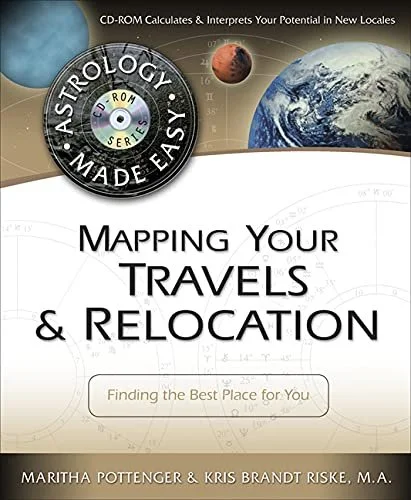
This is a really good place to start with relocation astrology, mainly because it brings you back to the basics first. You can’t really work with location techniques until you’re comfortable reading your natal chart, and this book makes that connection clear early on.
It’s also written in plain language, which makes it easier to follow if you’re still getting comfortable with astrology in general. Instead of overwhelming you with technical terms, it slowly builds up the ideas so you can actually see how they apply to real places and real-life decisions.
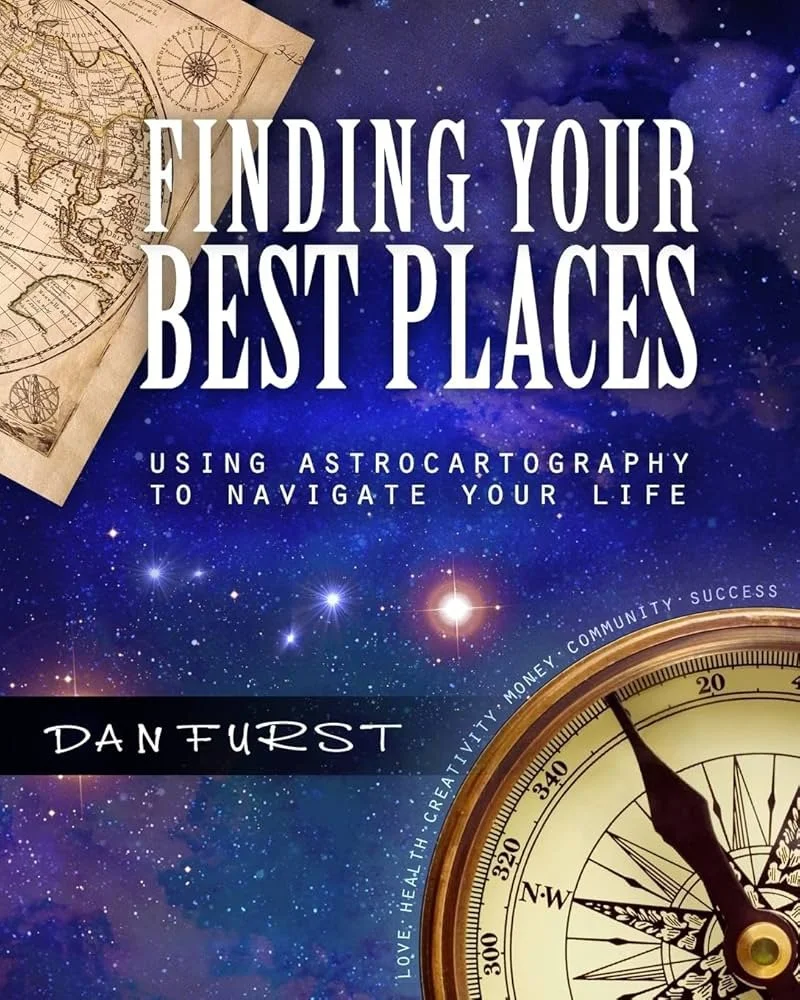
Finding Your Best Places: Using Astrocartography to Navigate Your Life by Dan Furst is quite a practical and accessible introduction to astrocartography. It’s way more beginner-friendly than the popular Psychology of Astrocartography, and is definitely more straightforward, by tapping into the explanations from the very beginning of the book.
The con side of the book, in my opinion, is that it’s not quite original; as this book seems like a simplified version of Psychology of Astrocartography, actually, when you read it.
Starting with it first to get the overall picture, once you know the basics of astrology, is a great starting point before you tap into the work of Jim Lewis.
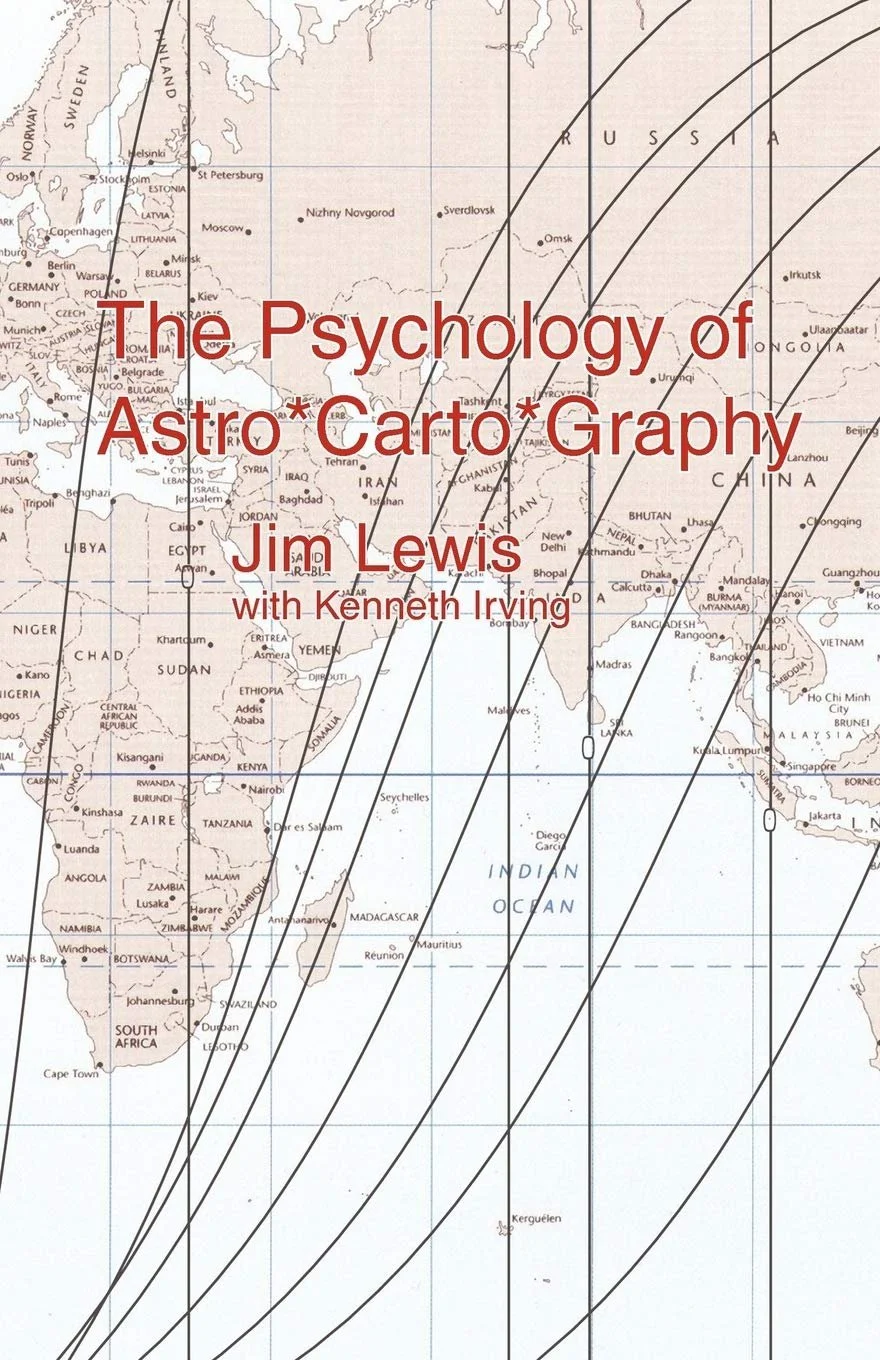
Definitely the best-known book on locational astrology is The Psychology of AstroCartoGraphy.
That said, if you’re completely new to astrology, it can feel a bit dense at first because it goes straight into the concepts without much hand-holding. It assumes you already have a working understanding of natal chart basics and starts exploring how planetary lines show up psychologically in different places.
It was published posthumously in 1997, based on the work of Jim Lewis, who innovated the concept of astrocartography itself. The focus is less on “how to read a chart step-by-step” and more on how location affects your inner experience, relationships, and life direction over time here.
Before diving into his work, it really helps to have a basic grounding in astrology, and even more so, some familiarity with Carl Jung’s literature. Jung’s work on archetypes, the unconscious, and projection gives a useful lens for understanding what Lewis is pointing to when he talks about how places can mirror or activate parts of your psyche.
It’s seen more as a reference point or foundational text than a beginner guide, something you return to as your understanding of astrocartography develops, rather than something you read once and fully absorb right away.
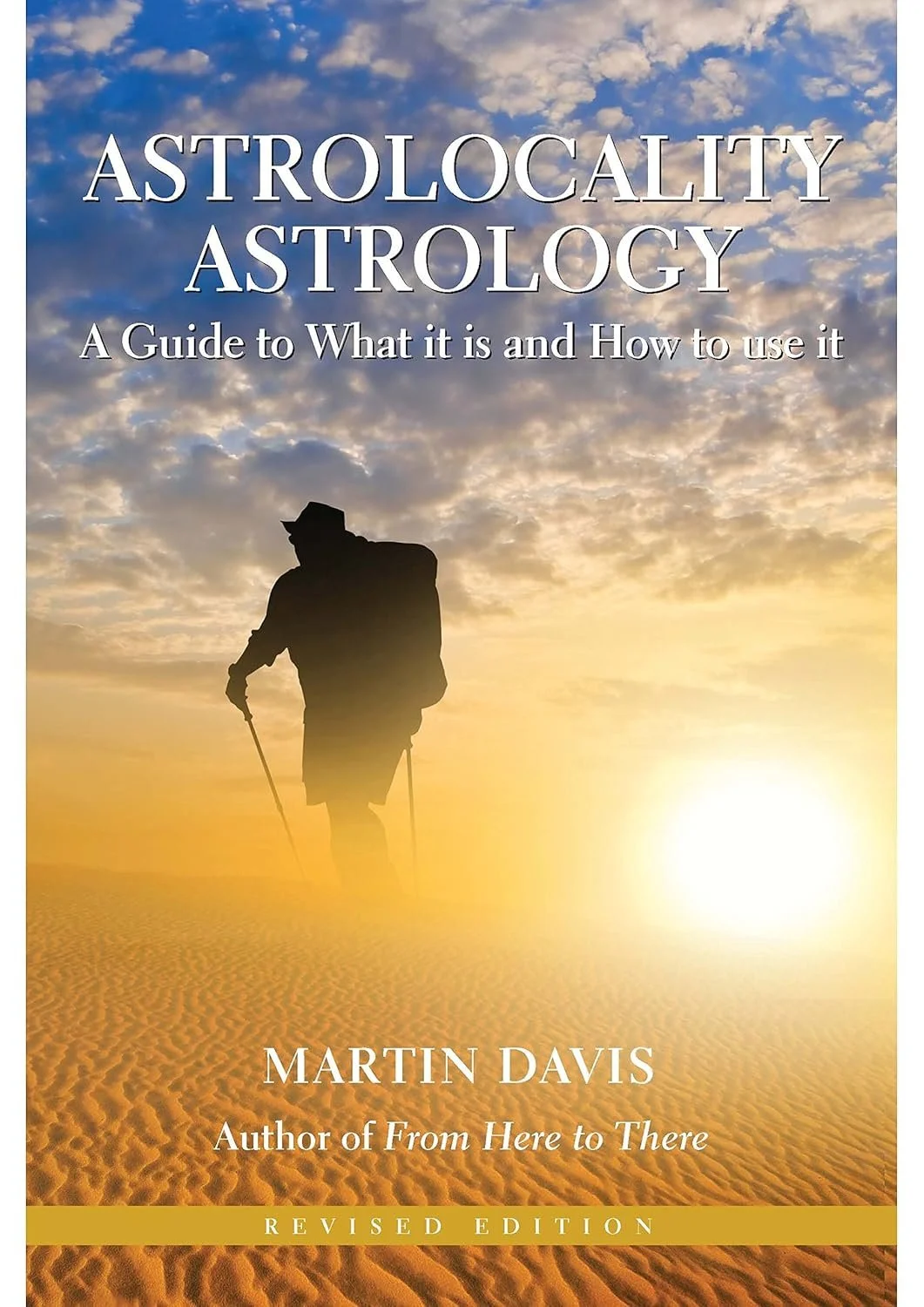
Astrolocality Astrology: A Guide to What it is and How to use it by Martin Davis feels more like a technical manual than an introductory overview. It takes a structured approach to locational astrology, focusing on how the different systems actually work and how they can be applied in real chart work rather than staying at the level of general interpretation.
What stands out here is its practical tone as it leans heavily into method, examples, and detailed breakdowns, which makes it useful if you’re trying to understand the mechanics behind locational astrology techniques. Because of that, it doesn’t really “ease you in,” and it can feel quite dense if you’re still building your astrology foundation, though.
It’s definitely the kind of book you use when you want clarity on how astrolocality works in practice!
b) Example focused
5. Where In The World by Erin Sullivan
Where in the World: AstroCartoGraphy and Relocation by Erin Sullivan feels more like sitting in on a live astrology workshop than reading a textbook.
The seminar-style format makes it easy to follow along, almost like you’re hearing real questions from students and the responses unfolding naturally when you read.
It’s an easy book to engage with, especially if you learn better through conversation and examples!
The seminar-style writing keeps it moving, so you’re not stuck in heavy theory for too long, and it often feels like things are being explained in real time rather than formally taught.
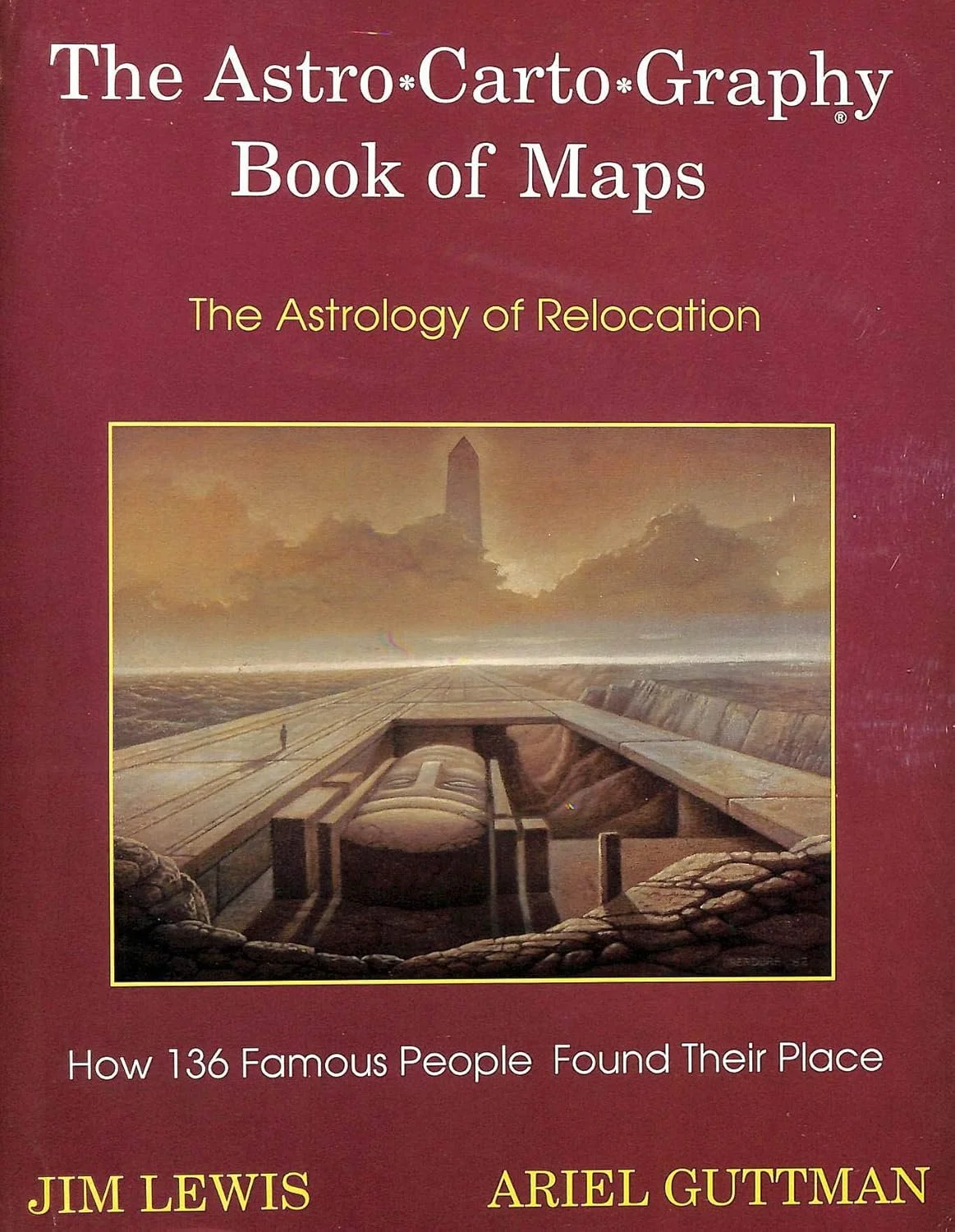
The AstroCartoGraphy Book of Maps by Jim Lewis and Ariel Guttman is basically a collection of lived astrocartography evidence.
It shows it through real people, real maps, and real-life outcomes, especially the charts of 136 famous individuals and how different places seemed to correlate with turning points in their lives.
It’s very much about learning through observation rather than instruction. In that sense, it feels closer to a research archive or case study collection. It’s more of something you sit with while you’re learning the system, using the examples to slowly build your own understanding of how location and planetary influence might actually show up in real life..
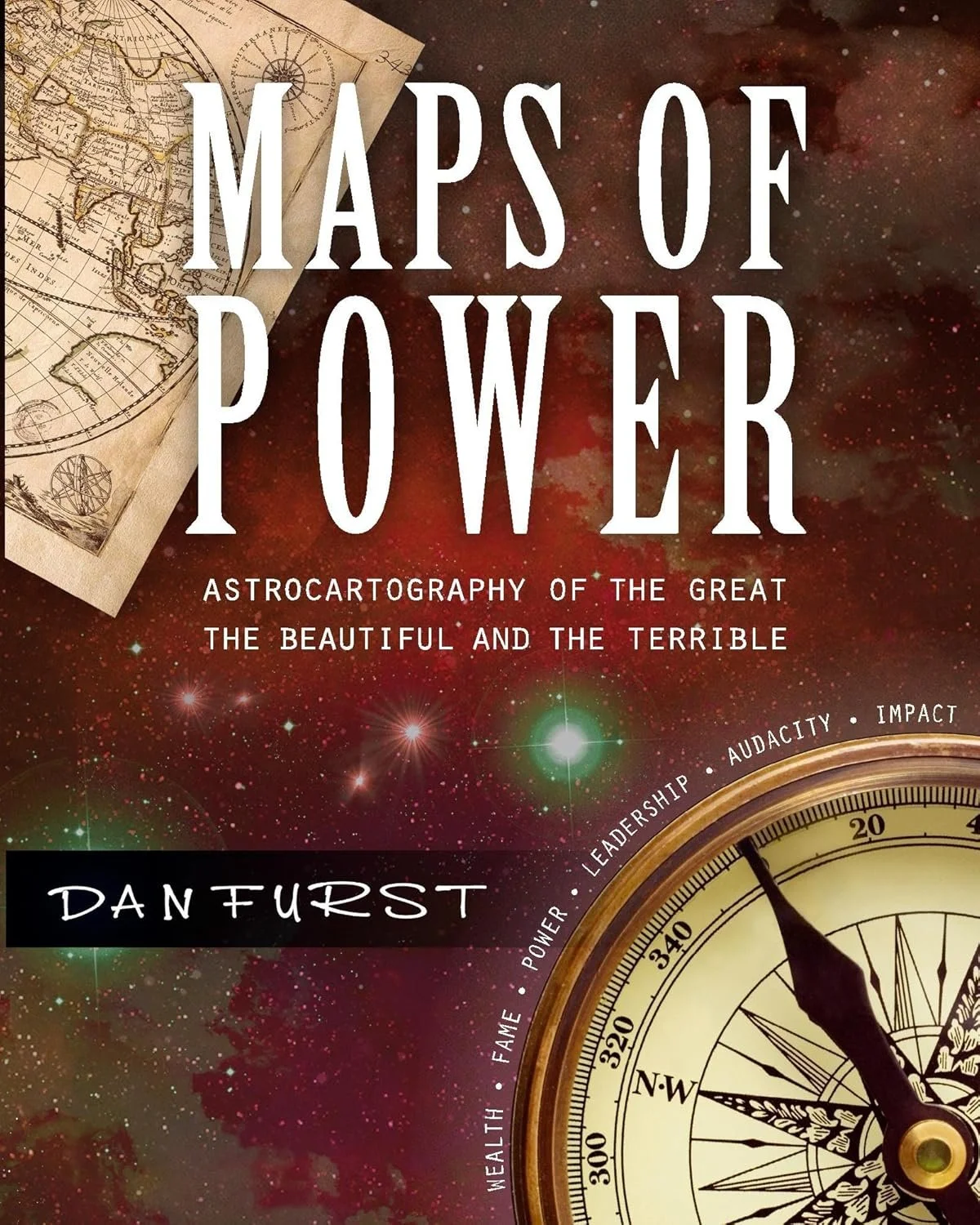
Maps of Power by Dan Furst feels very close in spirit to Jim Lewis’ Book of Maps, once again.
Like Lewis, Furst uses astrocartography through case studies of well-known figures, showing how different planetary lines seem to play out in actual lives across different locations, just divided into ‘‘the great, beautiful, and terrible’’ examples.
Where it slightly differs is in the way it prepares the reader before diving into the maps. Furst gives a clearer grounding in what each planet represents before starting, while Jim just gives a paragraph for each.
After that, though, the structure feels very familiar: real people, real places, and mapped-out life stories that show how location and planetary lines seem to interact in practice. In that sense, it works almost like an expanded version of the case-study approach Jim Lewis used.
c) Books focused on the Local Space technique
8. Local Space Relocation Astrology by Michael Erlewine
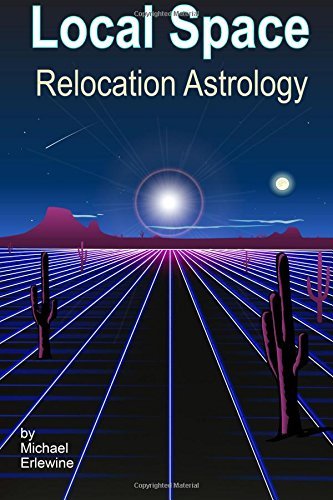
Local Space is one of those techniques that feels much more immediate than astrocartography once you understand what it’s doing. While astrocartography (as developed by Jim Lewis) maps where planetary lines fall across the world, Local Space, developed and popularized by Michael Erlewine, starts from a much more personal point: you, standing exactly where you are.
It kind of throws you straight into the concepts, assuming you already understand a lot of the background, though. Because of that, parts of it can feel hard to follow, especially if you are new to the subject, and sometimes it seems like ideas are introduced but not fully explained.
At the same time, you can tell that Erlewine is presenting something important and original. Erlewine leaves space for interpretation and deeper thought, too.
9. Planets in Locality by Steve Cozzi
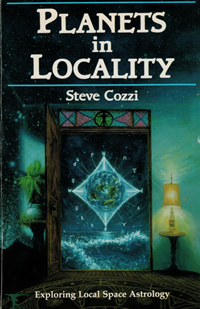
Steve Cozzi’s Local Space Astrology is most compelling in the way it connects astrology to ideas similar to Feng Shui, which is very interesting and experimental.
An extension of Michael’s work, yet way more detailed and also better written, with a clearer sense of structure and practical application that makes the system easier to actually work with in real life rather than just understand in theory.
It takes the same core idea of linking astrology to space and direction, but refines it into a more coherent and usable framework, where the emphasis is not just on concept but on how you actually move through and experience those planetary influences in a grounded, everyday way.
d) Geodetic astrology books
10. The Theory of Geodetic Equivalents in Relation to Mundane Astrology by Sepharial
This is basically the first systematic exposition of geodetic astrology in 20th century. Reading it gives you direct access to the original ideas, not filtered through later commentaries or simplified modern reinterpretations.
Sepharial's 1924 work, The Theory of Geodetic Equivalents in Relation to Mundane Astrology, is a foundational text that is concise but also presents a specific challenge: its author's dense, authoritative writing style. Simply put, the book's core idea is to create a direct, systematic link between astrological charts and physical places on Earth.
Because the writing is condensed and assumes your active participation, reading it forces you to slow down, re-read, and truly engage with the material. It’s the opposite of a fluffy astrology book. For many practitioners, wrestling with Sepharial’s style builds mental discipline and a deeper understanding of how astrology can be mapped onto the Earth.
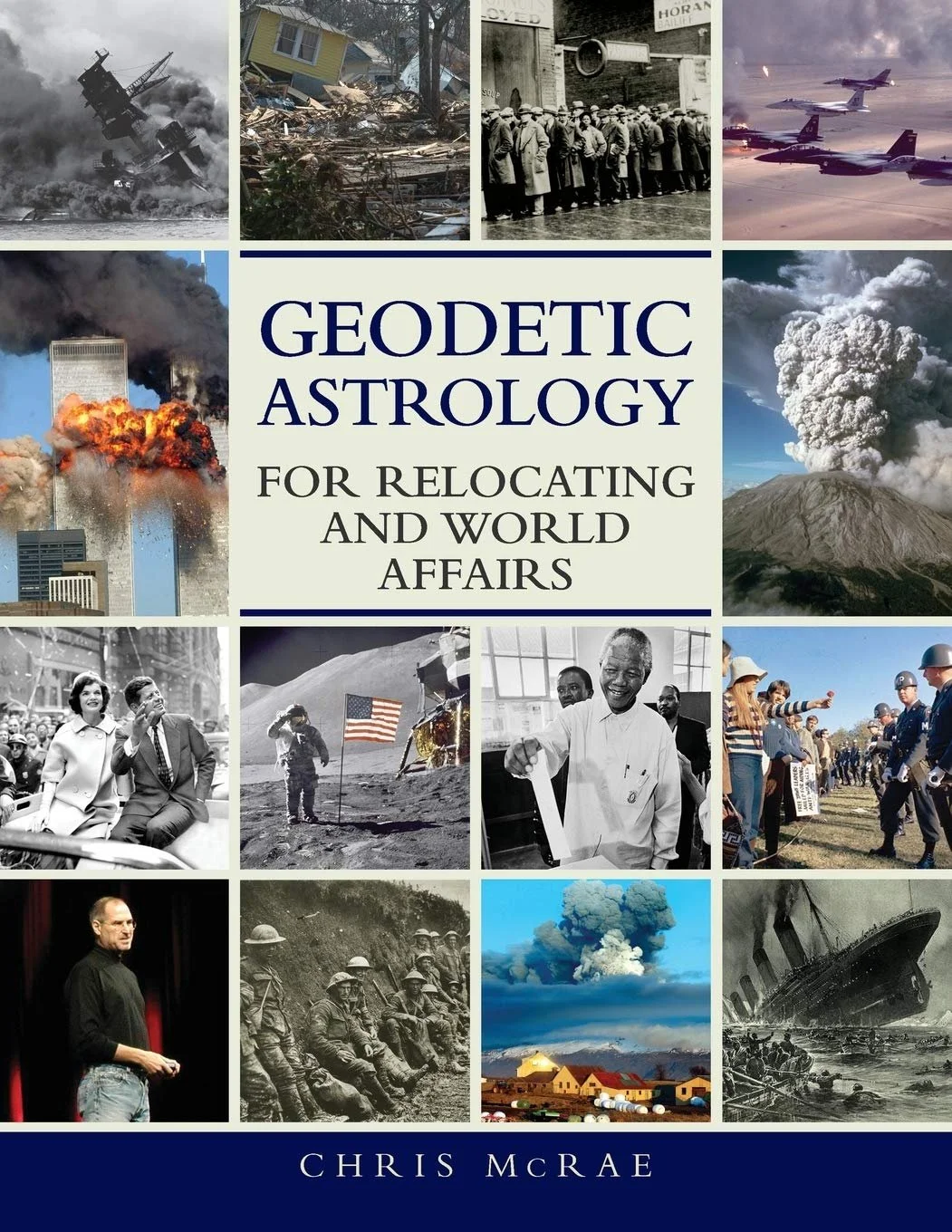
Geodetic astrology is a way of taking the astrology chart and “projecting” it onto the Earth itself, as if the zodiac were wrapped around the globe and each place on Earth had its own fixed astrological signature.
The main idea is that every degree of the zodiac corresponds to a specific longitude on Earth. So instead of only reading a birth chart as something personal and time-based, geodetic astrology treats the planet like it has a kind of built-in astrological map. London, New York, Cairo; each location can be assigned zodiacal degrees, and those degrees are then used to interpret the character or “tone” of that place. This is separate from your unique natal chart and astrocartography map.
Chris Rae’s Geodetic Astrology for Relocating and World Affairs is a modern practical guide to geodetic astrology, and a big part of the book is about relocation and world affairs, which is where Rae expands the system beyond personal astrology. He shows how geodetic mapping can be used to compare different places and understand why certain regions might express specific planetary qualities more strongly than others. This makes it useful not just for personal relocation work, but also for looking at political or global patterns through an astrological POV.
She goes through examples of historical events, political changes, and even natural disasters to show how geodetic mapping can be applied in real-world analysis. It’s written in a way that’s meant to be accessible to students, but still detailed enough that practicing astrologers can actually use the system.

Sepharial’s Directional Astrology is basically one of those advanced, technical astrology books that feels more like a manual. The whole book is built around primary directions, which is an old predictive system in astrology where you time events in a person’s life by measuring symbolic movement in the birth chart. Sepharial is very focused on making this system workable, so a big part of the book is tied to procedures for working out arcs of direction. It’s very structured, almost mathematical in tone.
He separates two different ways of doing directions: zodiacal directions and directions in mundo which is very important for locational astrology. The book is really about making prediction systematic, which can help a lot once you decide to practice locational astrology on an advanced level.
Interested to research further?
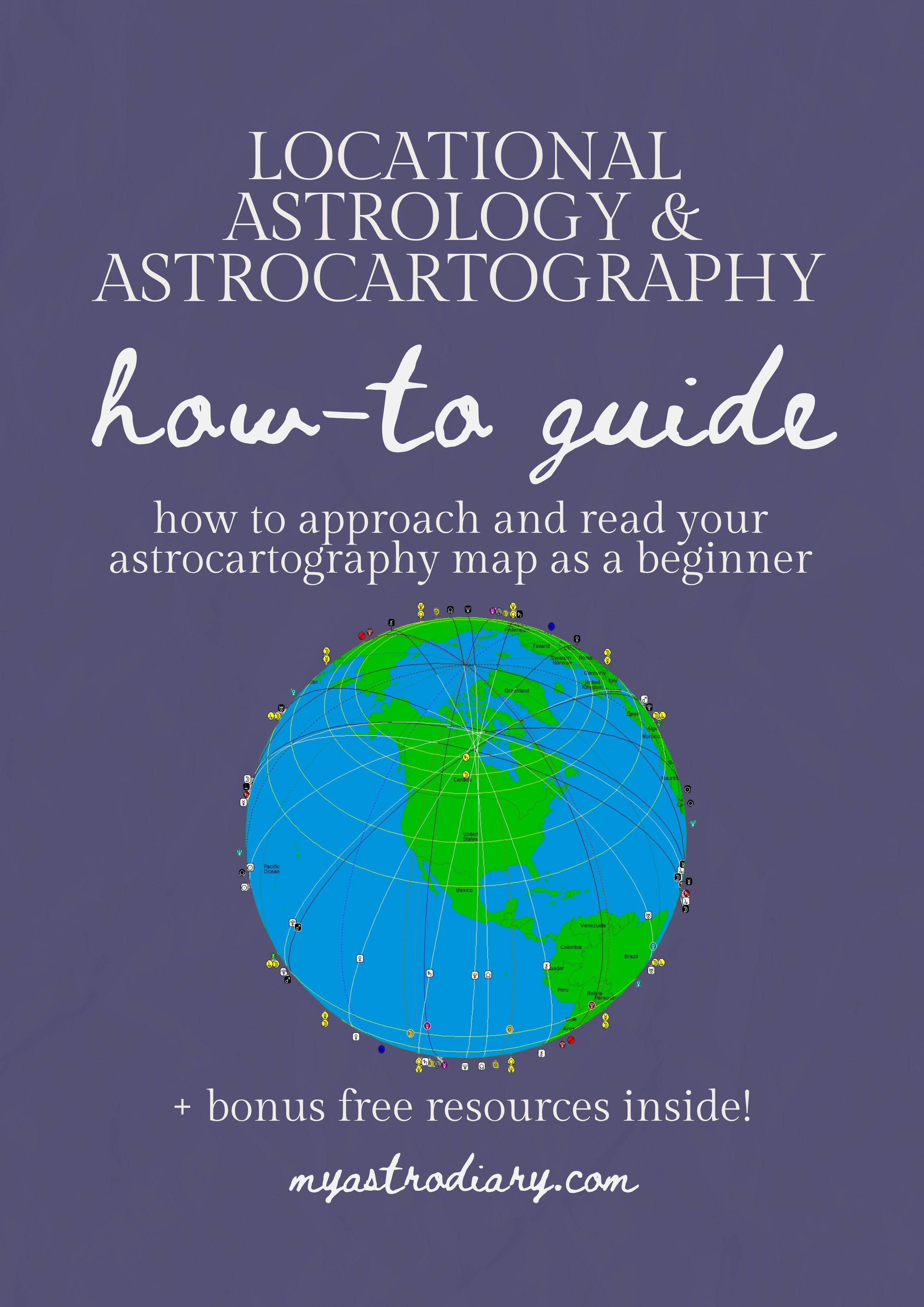
Learn how to approach and interpret your astrocartography map with this practical 50+ page beginner’s guide as a newbie. Inside you’ll find:
A step-by-step process for accurately launching your map
Guidance on how to connect with your intuition before reading it
A short history of locational astrology for context
An 18-step method to approach and understand your lines
Clear explanations of each major planetary line
Very valuable freebies inside to support your learning
and more!
Perfect for anyone ready to explore where their chart meets the world.
Please note that this digital product is designed for COMPLETE beginners, not intermediate or advanced locational astrologers!
NOTE: by purchasing, you agree with the understanding that by purchasing this digital product, you waive your right to cancel or request a refund.
+ by purchasing, you also agree on Terms & Conditions and Privacy Policy of My Astro Diaries.
If you want to research further, my Astrocartography How To Guide is a beginner-friendly introduction to working with locational astrology in a practical way. It’s designed to help you understand how to actually read an astrocartography map without getting overwhelmed by technical astrology language.
The guide focuses on a simple approach: how to open and interpret your map, how to identify the main planetary lines that matter most, and how to start connecting those lines to real-life experiences in different places. Instead of treating astrocartography as something abstract or complicated, it breaks it down into something you can actually use step by step.
It does not include any advanced approaches.
Share what locational astrology books do you enjoy in the comments below. Also, you can explore my other astrocartography diaries here on myastrodiary.com :)
