

Paran lines in astrocartography explained
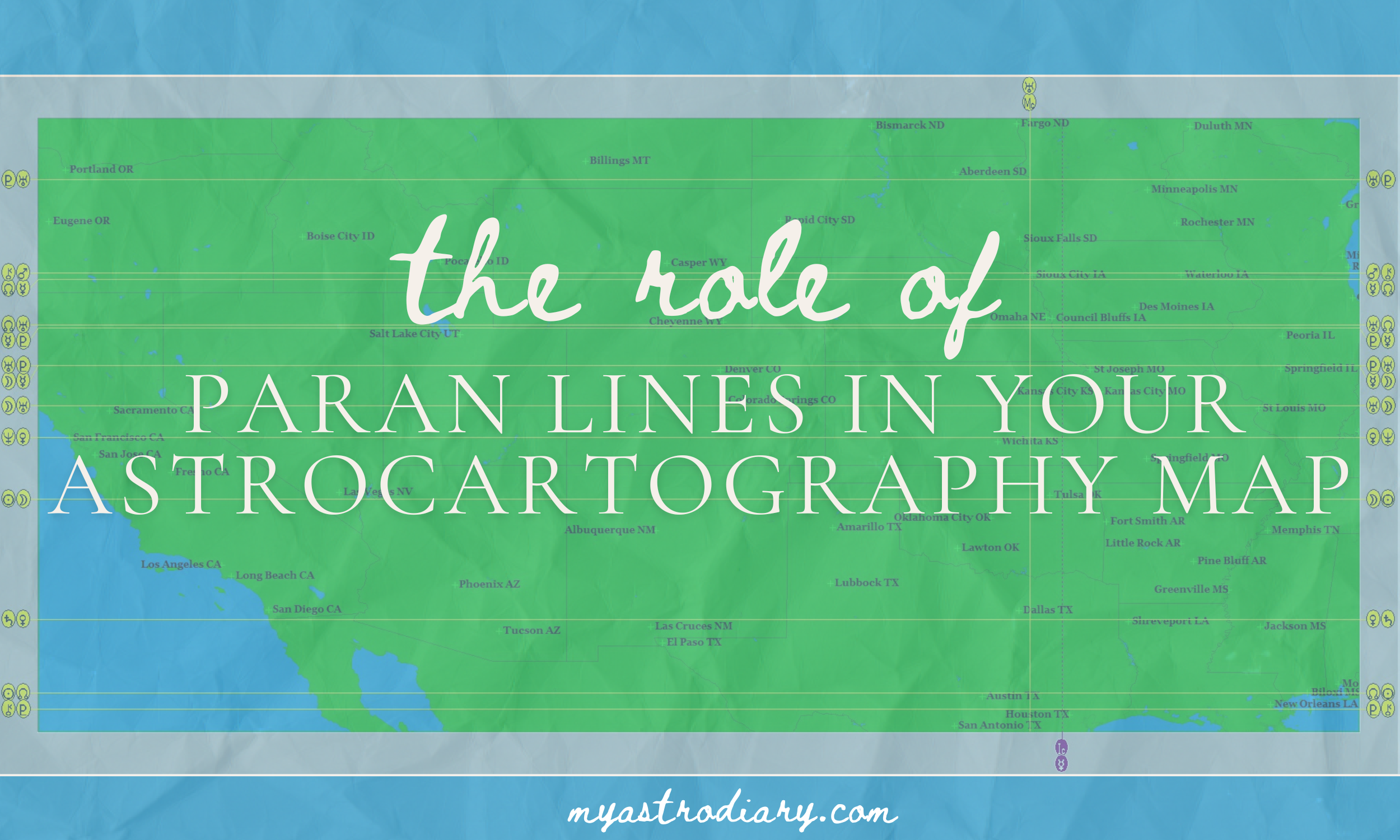
Unlike the standard vertical planetary lines that trace longitude, parans are latitude-based intersections, showing where two planetary energies meet simultaneously in angular positions.
Let’s explore why they are important in locational astrology and astrocartography, and by the end of this diary entry, you'll have a better understanding of how to make more intentional choices about travel, relocation, and the environments that best nourish your life path.
Explanation of paran latitude lines in astrocartography
Paran lines (short for paranatellonta, Greek term for rising together) emerge from the simultaneous rising, setting, culminating, or anti-culminating of two celestial bodies at the same latitude.
These crossings form energetic bands encircling the globe. When a person is under a paran, they experience the combined influence of both planets as a merged, intensified archetypal force.
For example, a Venus–Jupiter paran can usually amplify charm, creativity, and abundance, while a Mars–Pluto paran may provoke challenge, transformation, or power struggles, all depending on your unique natal chart and astrocartography map.

Example of Neptune/Venus paran line impacting San Francisco, CA and Wichita, KS by latitude
How paran lines differ from major planetary lines
Paran lines differ from major planetary lines mainly in how they form across latitude and longitude.
Major planetary lines (conjunctions between relocated angles and celestial bodies) run along specific longitudes.
They’re vertical lines on the map because they show where a planet was rising, setting, culminating, or anti-culminating at the exact moment of your birth. Since those angles depend mostly on longitude, the lines go straight up and down.
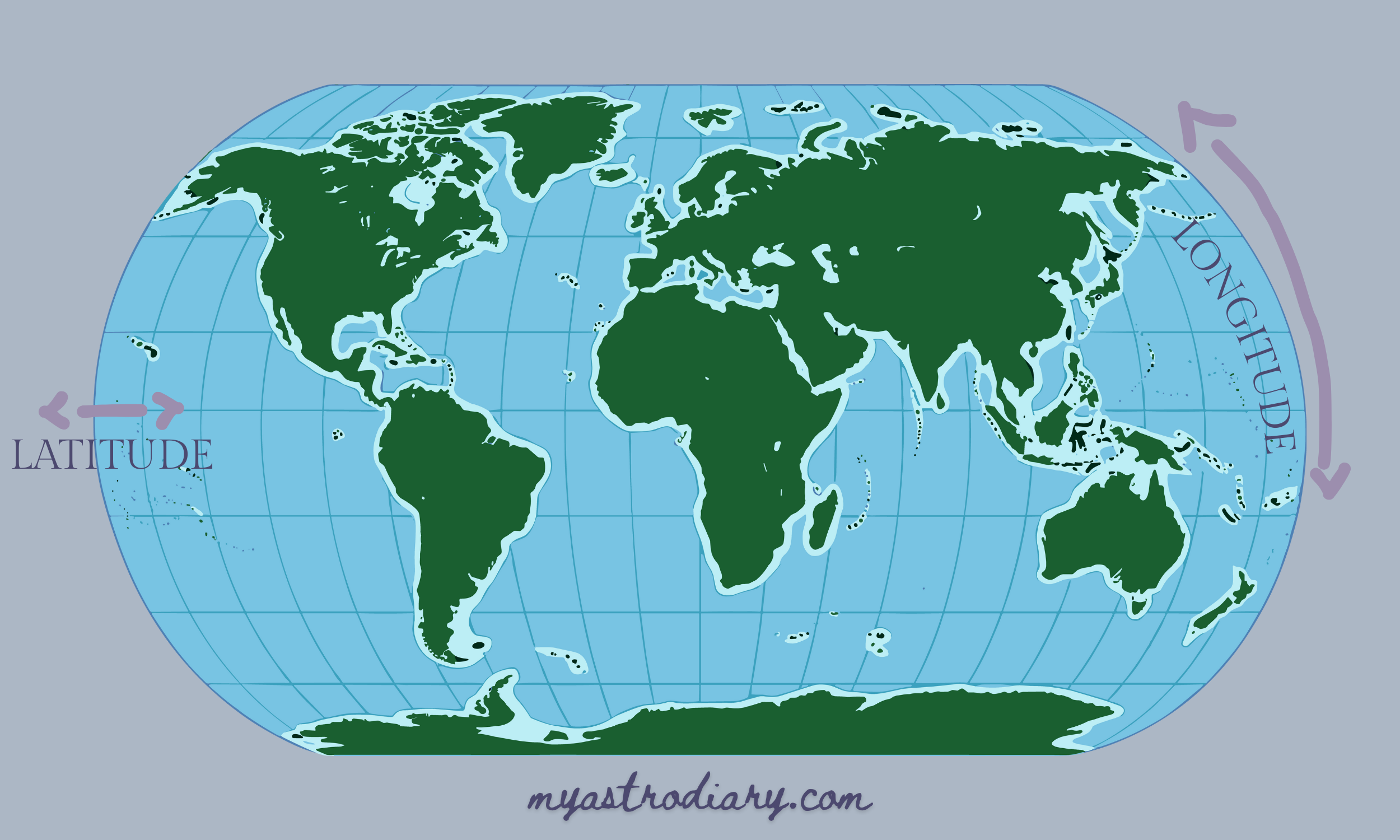
Latitude paran lines are horizontal, while longitude major lines are vertical
So, major astrocartography lines run north–south, where planets were angular at the moment of birth.
Paran lines, by contrast, run east–west, since they follow lines of latitude where two bodies form simultaneous angular relationships. It’s important to understand that paran lines give flavor to a certain major ACG line.
For example, you have the Moon IC line going through Switzerland, Germany, and Italy. Your Moon IC line won’t feel the exact same way in all of these three countries, as different paran lines impact them. Because they follow latitude, paran lines tend to run horizontally across maps, crossing multiple continents. This makes them uniquely valuable for identifying zones of convergence, places where two parts of a person’s chart or psyche are activated together.
Orb of influence is key with paran lines
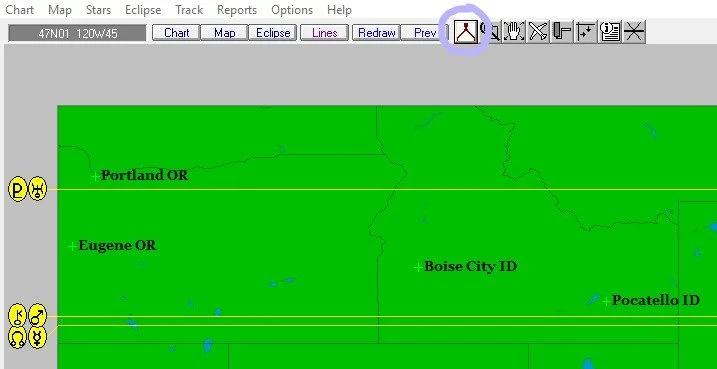
Locational astrologers use the measurement tool in professional software to measure the precise orb of influence.
In astrology and astrocartography, an orb of influence describes how far the effect of a planetary alignment extends from its exact point.
It’s like an energetic radius around the line, the zone where the planetary forces still operate strongly enough to be experienced, meaning you don’t have to be exactly on a certain line to feel its impact.
Think of the exact crossing of two planetary energies (the paran) as the core frequency or “bullseye.” The orb defines how far north or south (in latitude) that frequency can still be felt meaningfully before it fades.
The orb for major planetary lines extends roughly 700–800 miles (about 10°) on either side of the central line, while for paran lines, the orb is much narrower, about a 1/16 inch, or 1° either side of the line. Locational astrologers usually use up to 2° of measurement of paran latitude lines.
This means paran zones are narrow, concentrated, and precise. They can feel almost electric when you’re right within them, but move slightly away, and their influence drops sharply.
Discovering hidden aspects of your psyche with paran lines
Paran lines, just like the major lines in astrocartography too, can reveal hidden or “shadow” aspects of ourselves. When you travel or relocate along a paran connecting two planets, these latent energies may surface through intense experiences or challenges.
For example, someone who tends to suppress their Mars energy, like assertiveness, drive, or courage, might encounter conflict or demanding situations under a Mars–Pluto paran until they learn to express that energy consciously.
In this way, both paran lines and major lines aren’t just about “good” or “bad” locations as they act as mirrors, reflecting opportunities for inner growth and self-discovery.
How locational astrologers interpret and apply paran lines
In practice, interpreting a paran involves analyzing:

The two planets involved and their natal condition
The angles they occupy (rising, setting, culminating, anti-culminating)
The latitude where the interaction occurs
The context of transits, progressions, or relocation charts
A benefic dominant harmonious pair (e.g., Venus–Jupiter) might open opportunities for love and prosperity, while a more volatile combination (e.g., Mars–Uranus) could bring breakthroughs or specific supressed confrontations.
Keeping this in mind, even challenging parans have value as each one highlights a specific theme ready for transformation. The key is understanding what quality a given paran line emphasizes and whether one is prepared to work with it.
Locate your paran latitude lines and integrate them into your self-acknowledgement journey
Paran lines reveal the horizontal weave of planetary influence—the spots on Earth where two planetary energies meet. These are the places where two cosmic stories unfold at once, creating moments where fate and free will collide in real-life experiences.
And by exploring your paran latitude lines, you can connect with hidden parts of yourself and bring them into conscious expression, turning challenges into personal growth and self-recognition.
If this approach resonates, you can book a personalized reading with me where we can analyze specific places and what paran lines impact so you can work with them over time:
A relocation reading helps you understand how the energy of different places interacts with your birth chart, revealing where you’re most likely to feel aligned, inspired, and supported in life. As we do an in depth analysis of your three chosen locations within your astrocartography map, you will gain clarity of the exact energies that affect the regions of choice, so you can make a well-informed choice.
Because of the depth of this reading and my combined teaching-and-guidance approach, you will receive a 90–120-minute recorded session that explains your chart in detail so that you can revisit the insights anytime. I intend to empower you to learn and work with this tool on your own; this is not a traditional 1:1 consultation. Your reading is designed as a long-term resource, allowing you to continue exploring and learning from it at your own pace.
Prior to booking, you are accepting My Astro Diaries’ terms and conditions and privacy policy. Read my ethical guidelines here. You also understand that this isn’1 a 1:1 and that refund is not an option after booking. You can of course leave additional questions below the reading or via a voice note through my email.
PLEASE NOTE: Readings currently on a 30+ day delivery period! ⏳
