

Where lines cross, gardens grow if we decide to tend them
Monday (Moon Day) Inner Work Lesson, 22nd of September 2025 - Autumn Equinox in the Northern Hemisphere
Welcome. The goal of this lesson is to read it like a letter from one gardener to another, a steady calling to notice where your inner work meets your unique astrocartography map across the globe. The image is simple: planetary lines are energetic crossings on a map. At each crossing there is soil, waiting. Whether anything grows there depends on us.
Every map carries its own rhythm. Some places will call to you loudly, almost insistently, while others sit quietly in the background, waiting until you are ready. Not every line needs to be walked at once. Just like a gardener knows not all seeds sprout in the same season, you, too, must feel which when a patch of soil is asking for your attention.
Bearing witness to the planetary pathways that touch the land
When we look at an astrocartography map, at first it looks busy, almost noisy. Lines intersect, curve, and pull your eye all over the page. Stop there for a moment and breathe. Remember the formula from Satur(n)day practice #1 and acknowledge that all of these planetary lines are not chaos. It’s time to give them a different perspective, a more meaningful one, as they are basically meeting points, where particular energies overlap and speak to one another.
Imagine each line as a kind of light falling on a patch of ground. Where two or more lights meet, the ground gets a particular color and temperature. So, you might imagine it as an energetic canvas, hinting at what could take root there.
I like to think of planetary lines as potential garden beds. Some beds are fertile and ready. Some are compacted, full of old roots or stones (Saturnian much, isn’t it, right?)
Each crossing asks a question: will you plant here, or will you pass by?
Soil, seed, and attention
Every garden needs three things to begin: soil, seed, and attention.
Soil is your readiness. It is your life circumstances, your timing, your willingness to notice. Seed is the quality associated with the planetary energies.A Venusian seed often sprouts quickly, offering beauty and ease, but its growth can be fleeting if we take it for granted. A Saturn seed, by contrast, demands patience, structure, and steady commitment, but the growth it produces is enduring and deeply rooted.
Attention is the daily tending, the small acts that keep the seed alive. Keep in mind that seeds can’t grow in an environment that is full of self doubt, harsh inner criticism, or negative self talk. Seeds like when you sing to them and pour intentions into them. Actually, each step, each touch, each moment of attention counts. Even the smallest gesture you can imagine carries weight. A quiet glance at a sprouting seed, a gentle turn of the soil, a mindful pause to feel the texture beneath your fingers… all of it adds to the rhythm of care.
You do not need perfect conditions to begin. The sun may be hidden, the soil may be thin, the weather uncertain. What truly matters is honoring what is already present. The most remarkable growth often comes from unlikely soil, soil that at first seems poor or rocky, of course if it receives steady care, curiosity, and warmth!
There is a quiet magic in that and it is a reminder that locational astrology is not about guarantees or miracles. The planetary lines will not hand you a ready-made harvest, as they actually hand you a place to practice presence, a patch of energy to meet with care, to notice, and to nurture over time.
In that way, every line on your astrocartography map is less a command and more a point of energy to work with. In tending this way, you learn something essential: patience is as vital as effort, and care is more than action.
To tend or not to tend?
Tending is always choice. This is one of the most freeing parts of the inner work: no map, no line, no planetary crossing can compel you, because they point, suggest, illuminate, but they never enforce. Locational astrology and astrology in general is not deterministic and black and white in its nature. It’s role is to show you possibilities and guidance; the soil that could yield, the terrain that will resist, the currents that may support you if you move with care. Beyond that, everything rests in your hands.
Curiosity must guide the choice, not fear. Ask yourself with honesty, with a quiet edge of wonder: which garden actually draws me? Which soil reflects what I have overlooked or avoided? Where might I learn patience or even delight? The question is never which place(s) will give you perfection or ease, or which of them are ‘‘the best’’ for you. That is not the work. The question is, where does the land itself, through its alignment and is energy, offer the practice you need in this moment? Where will showing up change you more than it changes the soil?
In the act of tending, you learn the rhythm of energy, the patience of seasons, and the quiet joy that arrives not from results, but from the willingness to be present, day after day, line after line, from one transit to another. Some transits are the heavy rain, some are the sunniest day of the year.
Also, choosing to tend looks different for everyone. It shows up as practical decisions, small daily practices, and intentional shifts in how you spend your time and attention. For some people it means changing habits. That can be as simple as a ten minute morning ritual that echoes the planet’s quality you are working with, either remotely or nearby a certain planetary line.
Approach your astrocartography map with curiosity, not fear. Remember that all planetary lines are extension of you. Ask yourself playfully, which garden am I drawn to? Which soil feels like a mirror for something I have neglected? So the question definitely shouldn’t be which place will make my life perfect. The question is, which place offers the practice I actually need right now? This way, your intuition grows, while you are tending your garden!
Tools for the gardener
You do not need tools to start, but certain tools make tending easier, and once the garden grows, tools become a necessity.
And what is the gardener’s main tool? -Patience.
Potential cannot be rushed. Some seeds wait through the cold of winter; some need the slow heat of summer to bloom. Lines that seem empty today may be radiant tomorrow, if you have allowed yourself to remain present, receptive, and attentive. The tools of the inner gardener are subtle, but they are also enduring, shaping every step along the path and every bloom that eventually opens within your own soul.
Also, just as a gardener doesn’t try to dig with bare hands when a spade will do the job more cleanly, there are practical tools that help you work with the lines. A trowel lets the gardener loosen the soil without crushing the roots; in the same way, a simple care plan or micro-experiment lets you test a planetary crossing without overwhelming yourself or your life. Each tool gives leverage, a way to channel energy without strain.
The inner gardener works in subtle gestures: noticing a thought that recurs, observing a fleeting emotion, allowing a sensation in the body to guide you. These are the instruments that tune you to the energy of the lines. If you respond with calm presence, the gardens awaken. If you rush or push, the seeds shrink back, hidden from view.
Even gloves serve a purpose. They protect the hands while letting you dig deeper than you could otherwise. Boundaries, checklists, and structured practices do the same for you. They let you engage fully with a line’s energy while keeping the rest of your life intact. Without structure, you risk overextending, exhausting the soil and yourself.
Time itself is a teacher here. Some crossings reveal themselves instantly, their lessons flashing like sunlight on a river. Others ask for months, perhaps years, of gentle attention, returning again and again until you recognize their patterns.
Friction and compost
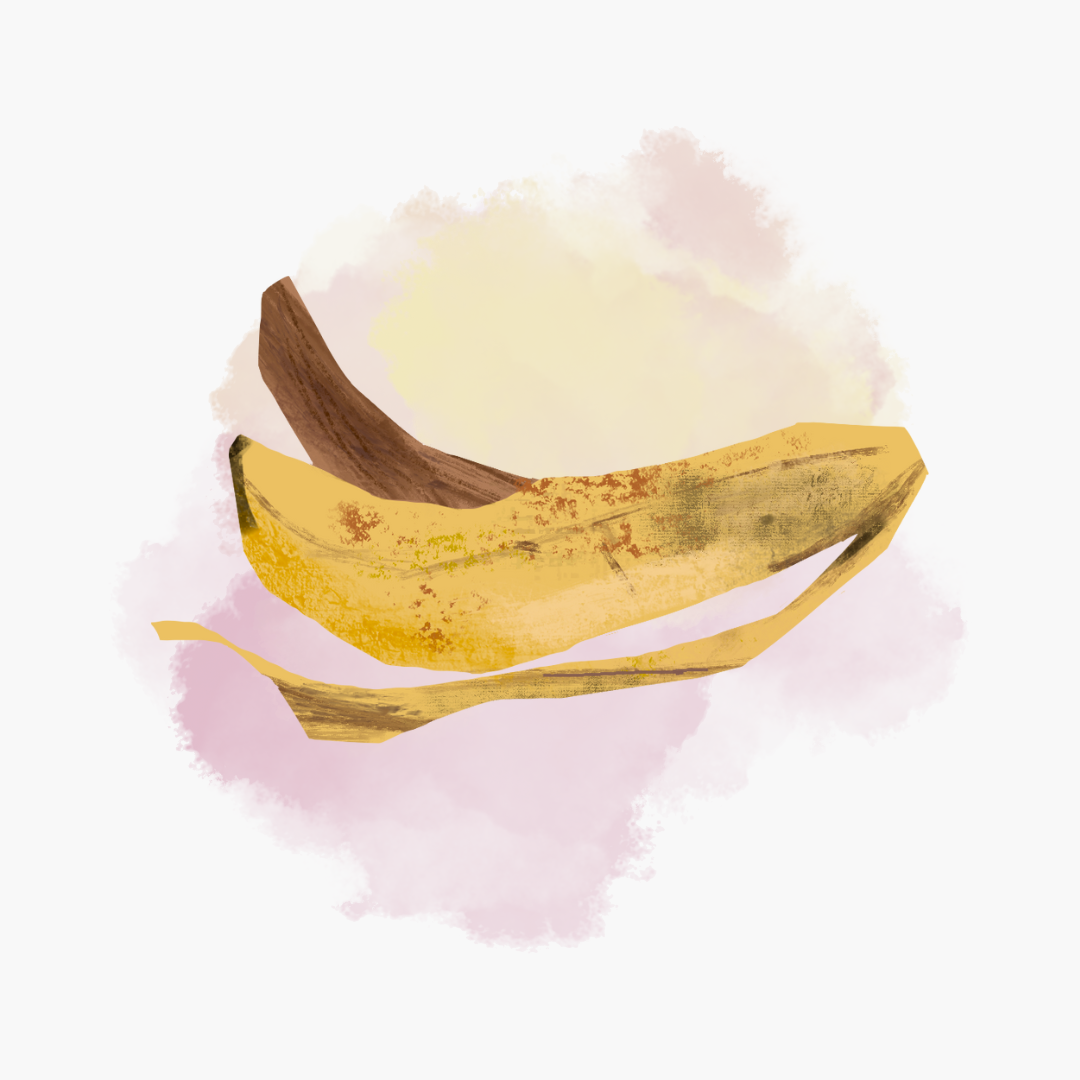
Not every crossing is comfortable. Some lines press against old wounds, tug at patterns you thought you had outgrown, or shine a light on habits you are still clinging to. At first, it can feel harsh, like rough soil that resists the spade. But friction is not failure. Give it another perspective, as it’s basically feedback. It is the composting that prepares the ground for growth that is deeper, stronger, and more resilient than ever before.
The uncomfortable moments are like the brown leaves and scraps that a gardener gathers to turn into compost. They smell strange at first. They seem dead or useless. But mixed with attention, awareness, and patience, they become rich soil. They teach you where your energy sticks, where resistance lives, and where transformation is quietly possible. The same line that unsettles you one day can, with steady tending, become a place of surprising abundance.
When a place triggers you, notice without rushing to fix it. Ask what is being called forward. Resist the urge to label a line as “good” or “bad.” A certain Mars planetary line may sharpen you in ways you never knew you needed, while a certain Pluto line may ask you to look at what you resist to let go. These are quite powerful soils, often rich in meaning.
Tending here asks for courage and care. It also asks for good boundaries. Not every soil needs your full attention. Know when to tend and when to leave a section fallow.
Yet, even friction has its rhythm. Some days will feel almost empty, almost easy, as if the soil has absorbed the nutrients and shifted beneath your feet. Other days it will flare again, reminding you of old habits, showing you the stubborn weeds you still need to pull. That’s the cycle. That’s the compost turning. And each turn, each challenge, adds depth to the garden of your life.
Harvest as reflection
Harvest is not a single moment, like a sudden gift that appears fully formed. It is a slow unfolding, a quiet noticing that accumulates over time. It shows up in the small gestures that suddenly feel different, in the patterns that shift without fanfare, in the inner tone that softens when you least expect it. It is the feeling of tension easing in a place that used to resist, the sense that a habit no longer grips you as tightly, or the subtle confidence that comes from simply showing up again and again.
Keep a harvest list in your diary. Write down the small wins, the pauses that matter, the days you made the effort even when it was difficult or you weren’t sure it would work. A page or two of these small notes becomes a living record, a map of your growth. Over time, these notes pile up like leaves in the corner of a garden bed, at first unassuming, but later, they reveal the richness that has been quietly building beneath the surface.
Reflection is what turns harvest into learning. Weeks, months, or even a season later, return to those entries. Look for the shapes that appear: repeated gestures, habits that have taken root, or emotions that no longer flare so quickly. These patterns are your curriculum. They are the evidence of the gardener you are becoming, showing you where your attention is effective, where your patience pays off, and where your care has created a subtle but real transformation.
Harvest is modest by nature. It is rarely applause, recognition, or a public display of success. More often it is the quiet satisfaction of noticing a shift: a relationship that has become steadier, a skill that has been honed, a moment of clarity that was once impossible. These private harvests are the richest kind. They are gold you carry quietly, a deepening of life that doesn’t need a witness to matter.
The quiet promise
At the heart of this approach is a simple promise to yourself. You will look. You will choose. You will care, in the small ways that actually matter. You will not expect perfection. You will keep a diary, draw lines, label crossings, and return to the pages. You will also forgive the places that do not take. Some seeds will not grow, and that is part of good gardening. Letting go is a kind of harvest too. This practice asks for patience, attention, and honesty. It also offers a steady consolation. The world becomes less random. Possibility appears in clearer shape. You begin to know where to stand and where to plant. Acknowledgement is key. <3
Recommended combo to curate your inner garden further

Until the next lesson xx
